

Introduction to Classification of Living Beings
Subject: Science and Technology

Overview
Classification is the systematic grouping of living organisms based on shared characteristics. Learn why classification is essential for scientific study, what criteria scientists use to group organisms, and how Robert Whittaker's Five Kingdom system organises all life on Earth into Monera, Protista, Fungi, Plantae, and Animalia.
1. What is Classification?
There are millions of living organisms on Earth, from microscopic bacteria to towering trees and highly complex animals. Each organism has its own characteristics, feeding habits, reproductive methods, and structural features. Studying such enormous variety without a systematic method of organisation would be practically impossible.
Classification is the process of grouping living organisms into distinct categories based on their similarities and differences. By identifying shared characteristics, scientists can place organisms into groups that reflect their natural relationships and make the study of life far more manageable.

A dense rainforest showing the remarkable diversity of plant life. The variety of living organisms on Earth makes a systematic method of classification absolutely essential.
Key Definition: Classification is the systematic arrangement of living organisms into groups and subgroups on the basis of their similarities, differences, and natural relationships.
2. Why Do We Classify Living Organisms?
Classification serves several important purposes in biology. Without it, studying millions of different species would be chaotic and inefficient. The table below summarises the key reasons why scientists classify living organisms:
| Purpose | Explanation |
|---|---|
| Easy identification | Classification makes it easier to identify and name organisms correctly. |
| Systematic study | It allows scientists to study millions of organisms in an organised and logical manner. |
| Understanding relationships | Classification reveals evolutionary and structural relationships between organisms. |
| Scientific communication | A shared classification system allows scientists worldwide to communicate accurately about organisms. |
| Basis for research | Classification provides a foundation for research in medicine, ecology, agriculture, and conservation. |
3. Basis of Classification
Scientists use several observable and measurable characteristics to group organisms. The most important bases of classification are:
| Basis | What It Means | Example |
|---|---|---|
| Cell structure | Presence or absence of a membrane-bound nucleus | Prokaryote vs Eukaryote |
| Body organisation | Single-celled or many-celled body | Amoeba (unicellular) vs Frog (multicellular) |
| Mode of nutrition | How the organism obtains energy and nutrients | Autotrophic (plants) vs Heterotrophic (animals) |
| Reproduction | Method of producing offspring | Sexual vs Asexual reproduction |
| Structural features | Body plan, cell wall composition, presence of chlorophyll | Chitin (fungi) vs Cellulose (plants) |
4. The Five Kingdom Classification
The most widely accepted modern classification system divides all living organisms into five kingdoms, proposed by Robert Whittaker in 1969. This system is based on cell type, body organisation, and mode of nutrition.
| Kingdom | Cell Type | Organisation | Nutrition | Examples |
|---|---|---|---|---|
| Monera | Prokaryotic | Unicellular | Autotrophic / Heterotrophic | Bacteria, Cyanobacteria |
| Protista | Eukaryotic | Unicellular | Autotrophic / Heterotrophic | Amoeba, Paramecium, Euglena |
| Fungi | Eukaryotic | Multicellular (mostly) | Saprotrophic / Parasitic | Mushroom, Yeast, Penicillium |
| Plantae | Eukaryotic | Multicellular | Autotrophic (photosynthesis) | Ferns, Trees, Mosses |
| Animalia | Eukaryotic | Multicellular | Heterotrophic (ingestion) | Frog, Human, Eagle |
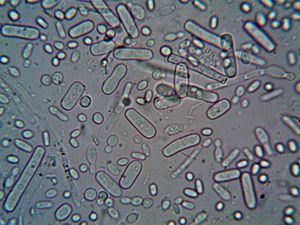
Monera Rod-shaped bacteria viewed under a microscope |
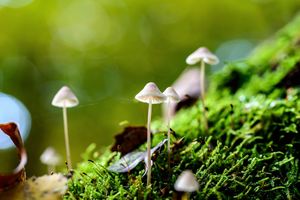
Fungi Mushrooms growing on a forest floor |

Plantae Ferns and green plants in a forest |
5. Watch and Learn
The following videos introduce the classification of living beings and the Five Kingdom system. Click on a thumbnail to watch.
Things to remember title
Things to Remember
- Classification is the grouping of organisms based on their similarities and differences.
- The need for classification arises from the enormous diversity of life on Earth.
- Main bases: cell type, body organisation, mode of nutrition, and reproduction.
- Robert Whittaker proposed the Five Kingdom classification in 1969.
- The five kingdoms are: Monera, Protista, Fungi, Plantae, and Animalia.
- Monera is the only kingdom with prokaryotic organisms — no membrane-bound nucleus.
- Plantae are autotrophs (photosynthesis); Animalia are heterotrophs (ingestion).
- Classification helps in identification, systematic study, and global scientific communication.
© 2021 Saralmind. All Rights Reserved.
 Login with google