

Least Count and Average Measurement
Subject: Science

Overview
1. Least Count
Every measuring instrument has a limit to how precisely it can measure. The least count of a measuring instrument is the smallest measurement that the instrument can reliably record. It represents the value of the smallest division on the instrument's scale.
For example, a standard ruler has markings at every millimetre. This means the smallest length it can measure is 1 mm. Therefore, the least count of a standard ruler is 1 mm. A measuring tape, on the other hand, also has millimetre markings on most models, so its least count is also 1 mm. However, more precise instruments such as a vernier calliper have a least count of 0.1 mm, and a micrometer screw gauge can measure as precisely as 0.01 mm.
Definition: The least count of a measuring instrument is the smallest value that can be measured accurately using that instrument. When recording any measurement, the value must always be stated with reference to the least count of the instrument used.
Least Count of Common Instruments
| Instrument | Least Count | Used to Measure |
|---|---|---|
| Ruler (scale) | 1 mm | Length of small objects |
| Measuring tape | 1 mm | Length of larger objects or distances |
| Vernier calliper | 0.1 mm | Diameter of small cylindrical objects |
| Micrometer screw gauge | 0.01 mm | Thickness of wire, sheet metal, etc. |
| Stopwatch | 0.1 s or 0.01 s | Time intervals |
| Measuring cylinder | 1 ml or 0.5 ml | Volume of liquids |
Why Least Count Matters: A Practical Example
Consider measuring the length of a piece of paper using two different instruments: a standard ruler and a measuring tape.
- Using a standard ruler (least count = 1 mm): the length reads as 30 cm 0 mm, which is recorded as 30.0 cm.
- Using a measuring tape (least count = 1 mm): the same length reads as 30 cm, recorded as 30.0 cm.
Both instruments give the same reading. However, the standard ruler cannot measure the thickness of that same piece of paper because the paper is far thinner than 1 mm, the least count of the ruler. For that measurement, a micrometer screw gauge with a least count of 0.01 mm is required.
Key Point: Any measurement recorded must cite the least count of the instrument used. If a ruler with a least count of 1 mm is used to measure 30 cm, writing "30 cm" is incorrect — it must be written as 30.0 cm to reflect that the measurement was taken to the nearest millimetre. Writing only "30 cm" implies the measurement was taken to the nearest centimetre, which would suggest a less precise instrument was used.
2. Average Measurement
In scientific measurement, it is rarely sufficient to measure a quantity only once. Small errors can occur in any single measurement due to the observer's eye position, the instrument's limitations, or slight variations in the object being measured. To obtain a more reliable and accurate result, scientists take repeated measurements of the same quantity and calculate the average (mean).
Why Repeated Measurement is Necessary
Consider measuring the time it takes for a ball to drop from a height of 2 metres using a stopwatch. If the measurement is taken only once, small errors in reaction time when starting and stopping the watch may affect the result. Taking the measurement three or more times and averaging the results reduces this error and gives a more precise value.
Calculating the Average
The average (mean) of a set of measurements is calculated using the following formula:
\[ \text{Average} = \frac{\text{Sum of all measurements}}{\text{Number of measurements}} \]
Worked Example
A student measures the time a ball takes to fall to the floor from a height of 2 metres. The student records the following three measurements:
| Trial | Time Recorded |
|---|---|
| First drop | \( 1.2 \, \text{s} \) |
| Second drop | \( 1.3 \, \text{s} \) |
| Third drop | \( 1.1 \, \text{s} \) |
Applying the average formula:
\[ \text{Average time} = \frac{1.2 + 1.3 + 1.1}{3} = \frac{3.6}{3} = 1.2 \, \text{s} \]
The average time for the ball to fall is 1.2 s. This is more reliable than any single reading alone.
Important: In scientific work, taking a single measurement and treating it as accurate is not acceptable practice. Repeated measurement and averaging is a fundamental requirement for producing reliable, precise results. Two measurements from one individual or two individuals in the same experiment may differ — averaging removes this variability and produces a more trustworthy result.
3. Watch and Learn
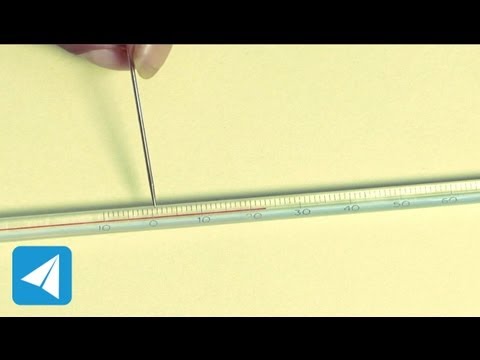
The following videos explain least count and measurement in science. Click on a thumbnail to watch.

Things to remember
- The least count of a measuring instrument is the smallest value that the instrument can accurately measure. It is equal to the value of one smallest division on the scale.
- Every measurement must be recorded in relation to the least count of the instrument used.
- A more precise instrument has a smaller least count. For example, a micrometer (least count 0.01 mm) is more precise than a ruler (least count 1 mm).
- The appropriate instrument must be selected based on the size of the quantity being measured and the level of precision required.
- In scientific measurement, a single reading is not sufficient. Repeated measurement reduces error and increases reliability.
- The average (mean) of repeated measurements is calculated by dividing the sum of all readings by the number of readings: \( \text{Average} = \dfrac{\text{Sum of measurements}}{\text{Number of measurements}} \)
- Averaging gives a more precise and trustworthy measurement than any individual reading on its own.
© 2021 Saralmind. All Rights Reserved.
 Login with google